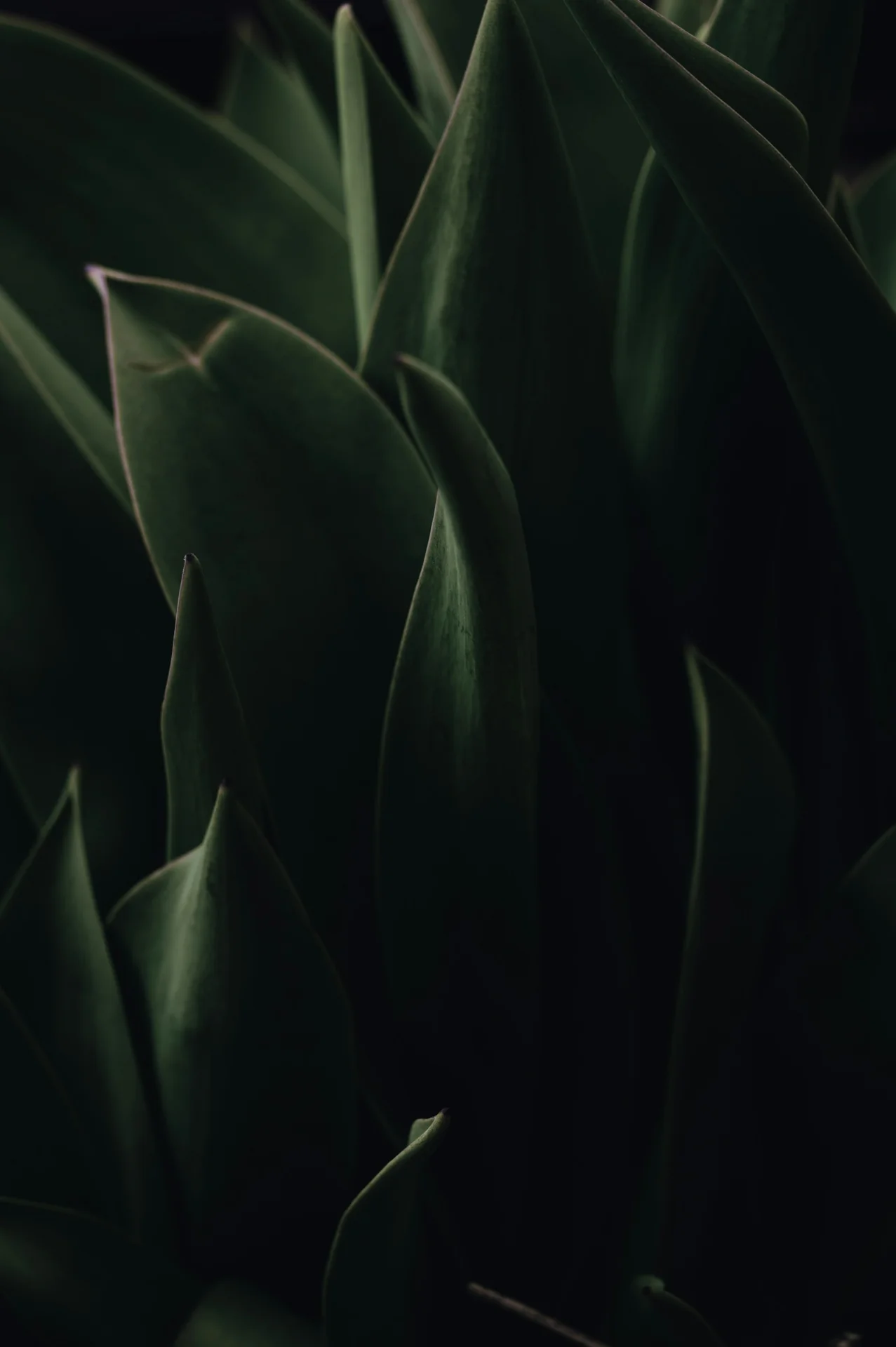
A close photograph changes the size of our attention. A leaf edge can take on the scale of a ridge. The gap between two petals can feel like an opening in a much larger space. The object has not become extraordinary; the frame has given an ordinary feature enough room to be seen.
Let the outline do some work
The edge of a leaf is a complicated line, even when it appears smooth at first. It bends, turns away from the camera and occasionally dissolves into the background. A narrow highlight can make one part prominent while another remains almost invisible. The outline offers a route through the image rather than a simple boundary around an object.
Try following the whole edge without naming the plant. Notice where your eye slows down or loses the line. Those interruptions are useful. They make the shape feel situated in light and space, rather than presented as a diagram. A close view can be descriptive without showing every part equally.
The inside has a structure too
Within a leaf, changes in surface direction may be visible as folds or differences in tone. A crease can divide two dark green planes. A vein can continue toward an edge and become hard to distinguish. These marks give the image an internal organisation that is separate from the outer contour.
You might compare this arrangement with a wide landscape. Both can contain a foreground, a receding surface and an area that remains unreadable. The comparison is visual, not literal: the leaf is not a miniature mountain range. It simply offers some of the same compositional relationships at a different scale.
Softness makes a hierarchy
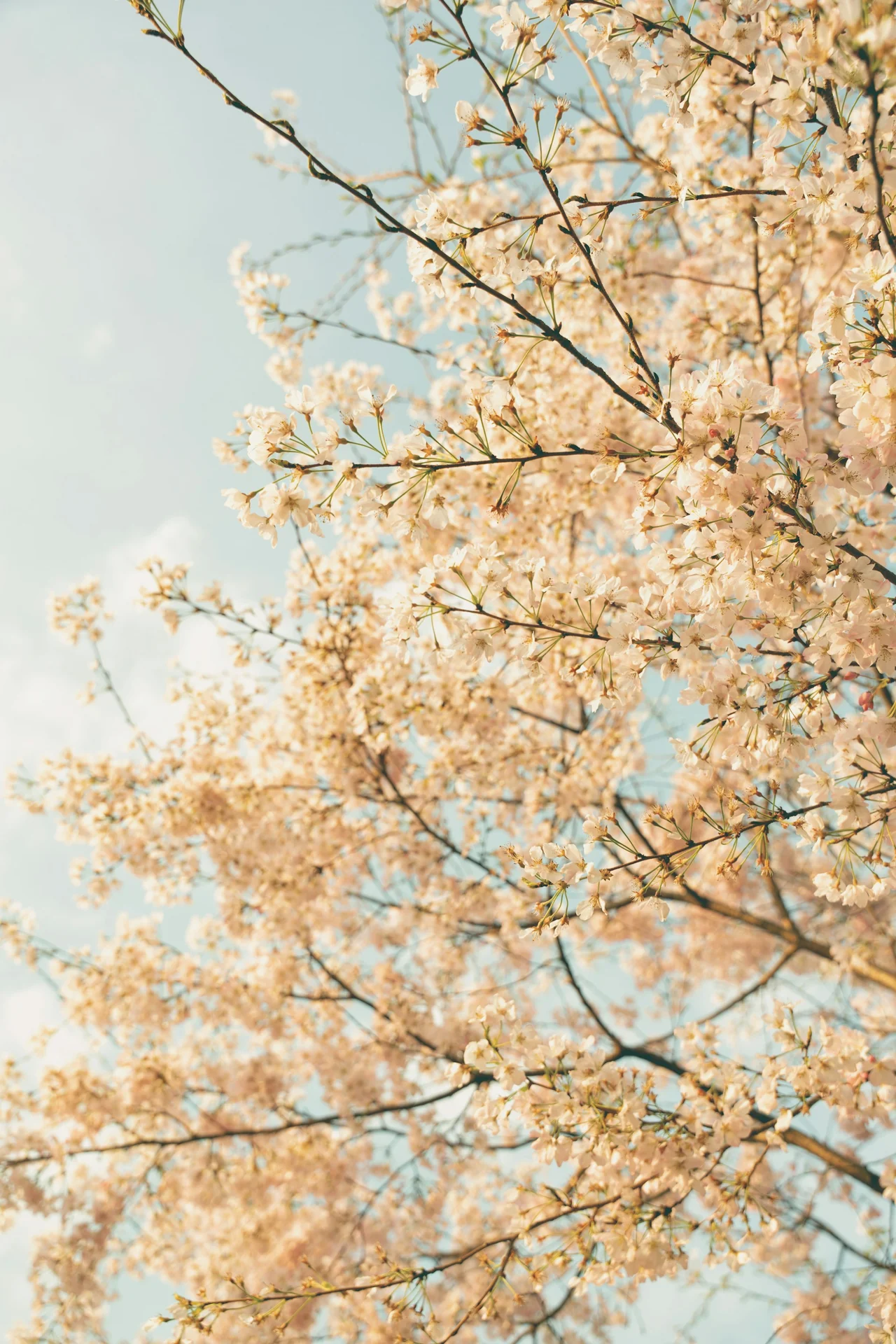
In a close view, one small area may be sharply described while nearby shapes become soft. The sharp area tends to receive attention first. But the blurred areas still contribute colour, direction and weight. Removing them from consideration makes the image seem more isolated than it really is.
The blossom photograph is a useful companion. Branches pass between recognisable flowers and softer clusters. The shifts in clarity suggest overlapping distances. You can read enough of the structure to follow it without being able to inspect every petal. The image offers an order of attention instead of an inventory.
What the frame leaves unknown
A close crop often removes information about the surroundings. We may not know the plant’s full size, where it grew or how the weather felt. It is tempting to fill that absence with a story. A more careful caption can simply acknowledge what the picture shows: a dark green folded surface, a pale edge, a branch carrying light flowers.
That restraint leaves the photograph open without making it vague. We can describe a shape precisely while remaining uncertain about its context. In this journal, seasonal groupings are visual associations unless a detail is independently established. A green leaf alone cannot prove a date, a location or a particular stage of growth.
Carry the scale back outside
After looking closely, return to a wider photograph. Find a small shape that you would usually pass over: a single branch at the edge, a break in the canopy, a patch of grass beside water. Allow it the same attention you gave the leaf. The wider view may start to reveal its own internal collection of small pictures.
This movement between near and far is one reason details belong in a seasonal journal. They prevent the landscape from becoming only a recognisable scene. A season can be held in a large view, but it can also be suggested by one edge and the light around it.